
How Much Does Warehouse Space Cost Near Asheville? A Pricing Breakdown
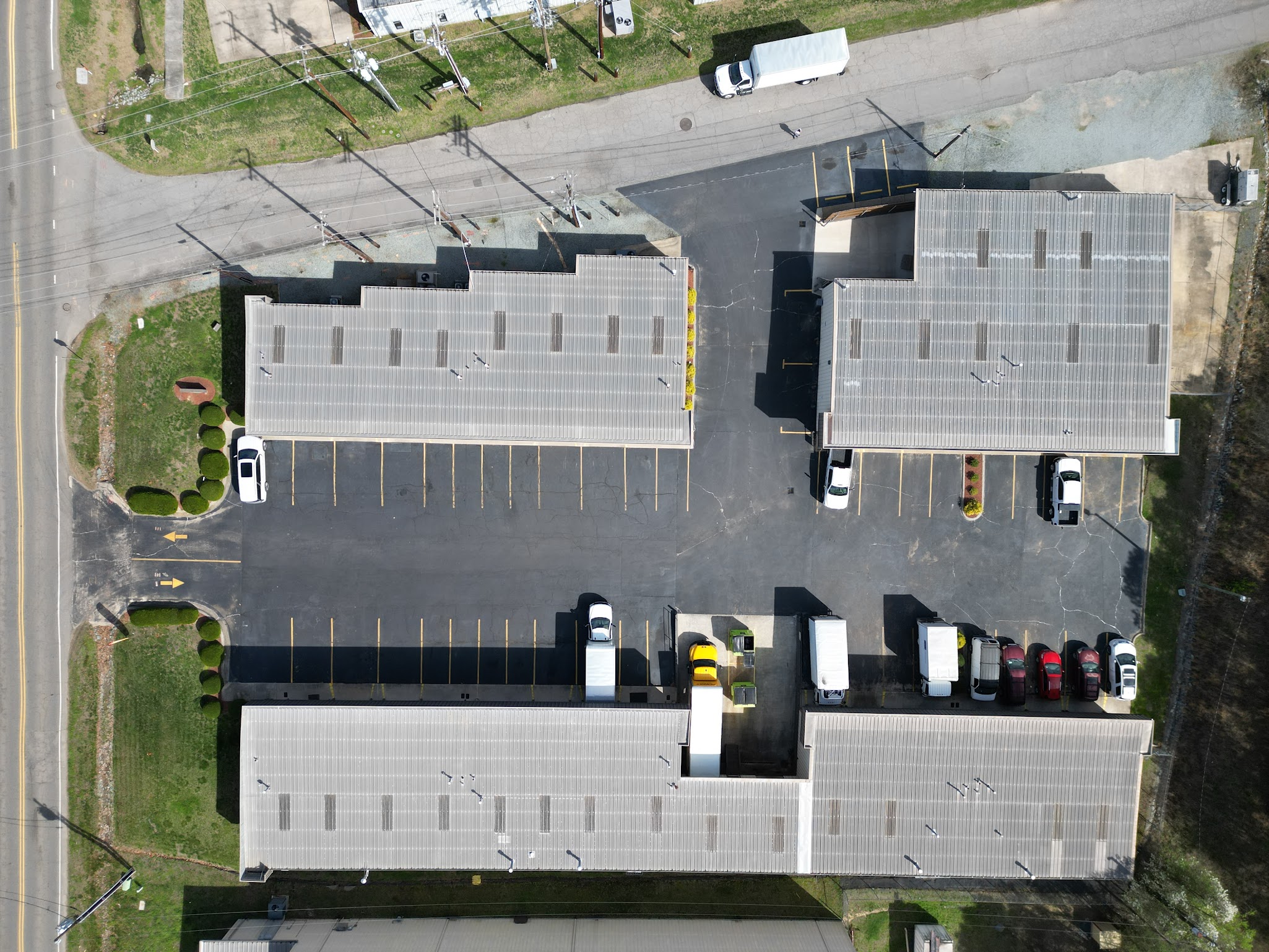
Warehouse space near Asheville costs money. If you’re new to leasing industrial space or coming from a different market, the pricing structure can be confusing. Base rent, NNN, utility allowances, and hidden fees all add up. Here’s the breakdown so you know what to expect.
What NNN Means (And Why It Matters)
NNN stands for “triple net.” Base rent is what the landlord quotes: $20 per square foot per year, for example. But you don’t just pay base rent. You also pay a share of building operating expenses.
NNN includes three things: real estate taxes (your proportional share of the building’s property tax), insurance (your share of the building’s liability and property insurance), and common area maintenance (parking lot upkeep, dumpster, exterior lighting, hallway cleaning if it’s a multi-tenant building).
For a single-tenant 2,000 SF warehouse in Fletcher, NNN typically adds $400 to $600 per month to your base rent. On a multi-tenant building (like a flex park with 10 units), NNN might be slightly lower because costs are distributed. NNN varies by building age, location, and how aggressively landlords maintain things.
If a lease says “$20 NNN,” that’s what you’re paying in base rent only. The landlord will send you a bill for NNN separately, usually quarterly or annually. Budget for the full cost: base plus NNN.
Pricing by Location
Fletcher sits at the high end. New flex space runs $20 to $22 per square foot base rent NNN. Older industrial in Fletcher is $16 to $18. The premium reflects newer construction, better clear height, improved electrical, and landlord attentiveness.
Arden is $18 to $20 on newer flex, $14 to $17 on older stock. You save $2 to $4 per square foot compared to Fletcher, but inventory is slightly more limited and building quality is mixed.
Hendersonville is $14 to $16, a solid $4 to $6 savings compared to Fletcher. But you’re 30 minutes further from central Asheville, and commute time costs money.
Asheville proper has very little inventory. What exists is either premium retrofit space (old bank buildings, converted commercial) at $22 to $28 per square foot, or older industrial at the city edge that’s not well-maintained. Avoid the city proper unless you have a specific reason to be there.
| Location | Base Rent/SF | NNN/Month Typical | Example 2,000 SF Monthly Cost |
|---|---|---|---|
| Fletcher, New Flex | $20-22 | $450-600 | $3,500-3,900 |
| Fletcher, Older | $16-18 | $350-450 | $2,700-3,300 |
| Arden, New Flex | $18-20 | $400-550 | $3,400-3,800 |
| Arden, Older | $14-17 | $300-400 | $2,500-3,150 |
| Hendersonville | $14-16 | $300-400 | $2,400-2,900 |
| Asheville, Limited Inventory | $22-28 | $400-500 | $3,900-5,100 |
These numbers assume 12 month terms. Shorter leases (1 year) cost more monthly. Longer leases (3 to 5 years) cost slightly less because landlords offer discounts for certainty.
What Affects Price Within a Market
Clear height is the biggest variable. A 20 foot clear height building rents for 5 to 10 percent more than a 14 foot building, all else equal. If you can stack or store tall items, that extra clear height is worth the premium.
Electrical capacity matters. 200 amp service costs more than 100 amp, but if you need 200 amps and the building only has 100, you’re facing a $3,000 to $8,000 utility upgrade that takes 6 to 8 weeks. Budget for the premium if you need heavy electrical.
Drive-in doors command a premium, usually $0.50 to $1.00 per square foot annually. A 2,000 SF unit with a drive-in is $1,000 to $2,000 more per year than the same unit with only a man door. If you need that door daily, it’s worth it. If it’s occasional, you might negotiate around it.
Office space adds cost. A 500 SF office attached to 1,500 SF warehouse rents higher than 2,000 SF pure warehouse. Office rents at $25 to $35 per square foot; warehouse at $18 to $22. A 200 SF office can add $200 to $400 annually to your total rent.
Building age and condition matter. New construction (built 2015 or later) commands a 10 to 15 percent premium. Older industrial from the 1980s rents cheaper but comes with risk: roof leaks, electrical issues, column spacing that doesn’t fit your needs.
Floor condition affects maintenance costs you’ll absorb. Fresh concrete or epoxy coating is a cost that might justify a slight rent premium; cracked or soft concrete is a discount that you’ll pay for in equipment damage and maintenance.
Real-World Examples
2,000 SF, Fletcher, New Flex, No Office Base: $20 per SF = $40,000 per year = $3,333 per month NNN: $500 per month average Total: $3,833 per month
1,000 SF, Arden, Older Industrial, Drive-In Door Base: $16 per SF = $16,000 per year = $1,333 per month NNN: $350 per month Total: $1,683 per month
3,000 SF, Hendersonville, New Flex, 200 Amp Electrical Base: $16 per SF = $48,000 per year = $4,000 per month NNN: $600 per month Total: $4,600 per month
2,000 SF, Fletcher, New Flex, 400 SF Office, Drive-In Door Warehouse: $20 per SF = $1,600 per month Office: $30 per SF = $100 per month Drive-In Premium: $75 per month NNN: $500 per month Total: $2,275 per month
Negotiating Price in a Tight Market
Asheville’s 2.9% vacancy gives landlords negotiating power. But they still want long-term, reliable tenants. Here’s what moves the needle:
Lease length: a 3 year lease gets you 3 to 5 percent off. A 5 year lease gets you 5 to 8 percent off. A 1 year lease costs a premium (5 to 10 percent) because landlords hate short terms in a tight market.
Tenant improvements: ask the landlord to paint, patch concrete, or upgrade electrical as part of the deal. Landlords will sometimes spend $1,000 to $2,000 to get a signed lease.
Renewal: sign a 3 year lease with a 2 year renewal option at a fixed rate. This locks you in and gives you certainty.
Occupancy guarantees: if you’re concerned about demand, propose a 1 year lease with a 3 year option (at the same rate) once you’ve proven the business works. This protects you while giving the landlord security.
Don’t negotiate NNN. That’s real cost (taxes, insurance, maintenance). Landlords won’t budge. Negotiate base rent.
What You’re Actually Paying
On a 2,000 SF unit at $20 NNN in Fletcher for 3 years, your all-in cost is roughly $91,600 per year or $7,633 per month. That’s a significant operating expense.
Break it down: $40,000 annual base rent, $6,000 annual NNN (approximately $500 per month), plus utilities ($800 to $1,200 per month depending on heating and equipment), equals $46,000 to $48,000 annually before you use the space.
That’s why lease negotiation matters. A 5 percent discount on base rent saves you $2,000 per year. A landlord who covers your first month’s rent saves you $3,333.
Utilities and Other Costs
Utilities typically aren’t included in warehouse leases. You pay electric (for lighting, heating, air compressors, equipment). You might pay natural gas (for heating). Some newer flex parks have the landlord paying utilities and rolling it into NNN; ask.
Budget $800 to $1,200 per month for utilities on a 2,000 SF unit depending on your equipment, how much you’re running, and the building’s insulation. Heated space costs more. Air conditioned space (rare in Asheville) costs more.
Insurance is your responsibility (property and liability). Budget $50 to $100 per month for a small operation; more if you’re storing valuable goods or running heavy machinery.
Compare Markets
Asheville’s $18 to $22 range is middle-of-road for the Carolinas. Durham warehouse space runs $16 to $20. Columbia, SC runs $14 to $18. Charlotte runs $20 to $26. So Asheville is competitive, especially considering the mountain market constraints.
The trade-off: Asheville has limited supply (2.9% vacancy). You might pay a competitive rate but have less choice.
Moving Timeline and Costs
Move-in costs include first month’s rent, security deposit (usually 2 months rent), and landlord-required improvements. Get Flex Space can move you in as fast as 2 weeks.
Budget $8,000 to $10,000 in upfront costs for a 2,000 SF space: $3,333 first month, $6,666 security deposit, maybe $1,000 in setup (electrical work, shelving, paint).
Smaller spaces (1,000 SF) run $4,500 to $6,000 upfront. Larger spaces (3,000 SF) run $12,000 to $15,000.
Related Reading
For more on what goes into the lease itself (what you’re responsible for, renewal options, termination clauses), see our guide to understanding NNN leases.
Check current Asheville flex space availability to get live pricing on units that are available now.
Additional Resources
FAQ
Q: What’s a realistic all-in monthly cost for a 2,000 SF unit? A: Budget $3,500 to $3,800 for base rent plus NNN in Fletcher, $3,000 to $3,300 in Arden. Add $800 to $1,200 for utilities. That’s $4,300 to $5,000 per month total. Older buildings in Arden might run $2,500 to $2,800 plus utilities, bringing you to $3,300 to $4,000.
Q: Does length of lease really affect the price? A: Yes. A 1 year lease costs 5 to 10 percent more monthly than a 3 year lease. A 5 year lease costs 5 to 8 percent less than a 3 year. On $40,000 annual base rent, that’s $2,000 to $4,000 annually. If you can commit to 3 to 5 years, do it.
Q: What’s the difference between base rent and NNN? A: Base rent is what the landlord keeps. NNN is your share of building operating costs (taxes, insurance, maintenance). Landlords don’t profit on NNN; they bill it back to tenants. You can’t negotiate NNN much, but you can negotiate base rent. Focus negotiation there.